The stone embroideries of Nova Kakhovka in textiles
2022–2023
A textile art project recreating the architectural ornaments of Nova Kakhovka, Ukraine, to preserve and share a cultural heritage threatened by war and destruction.
The Work
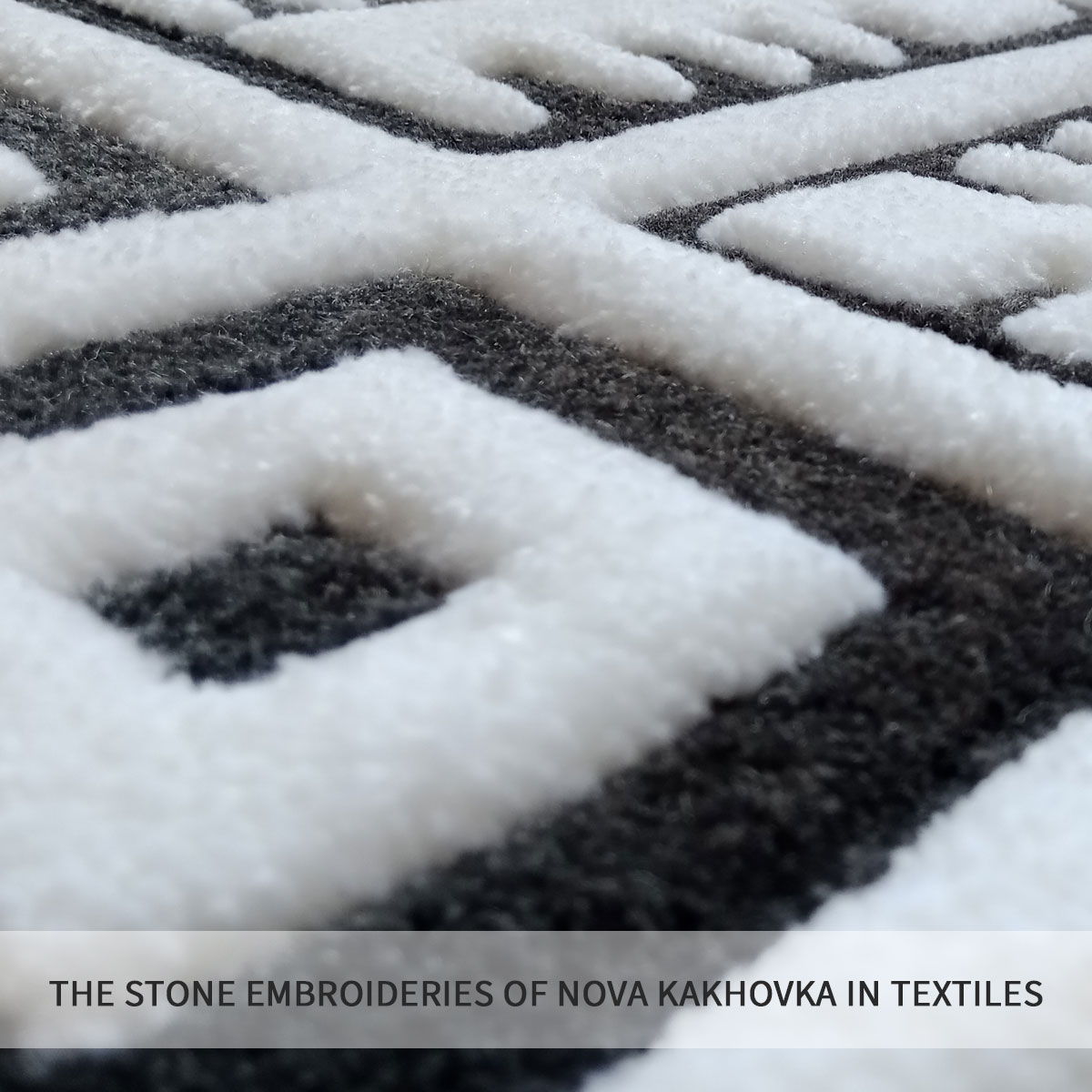
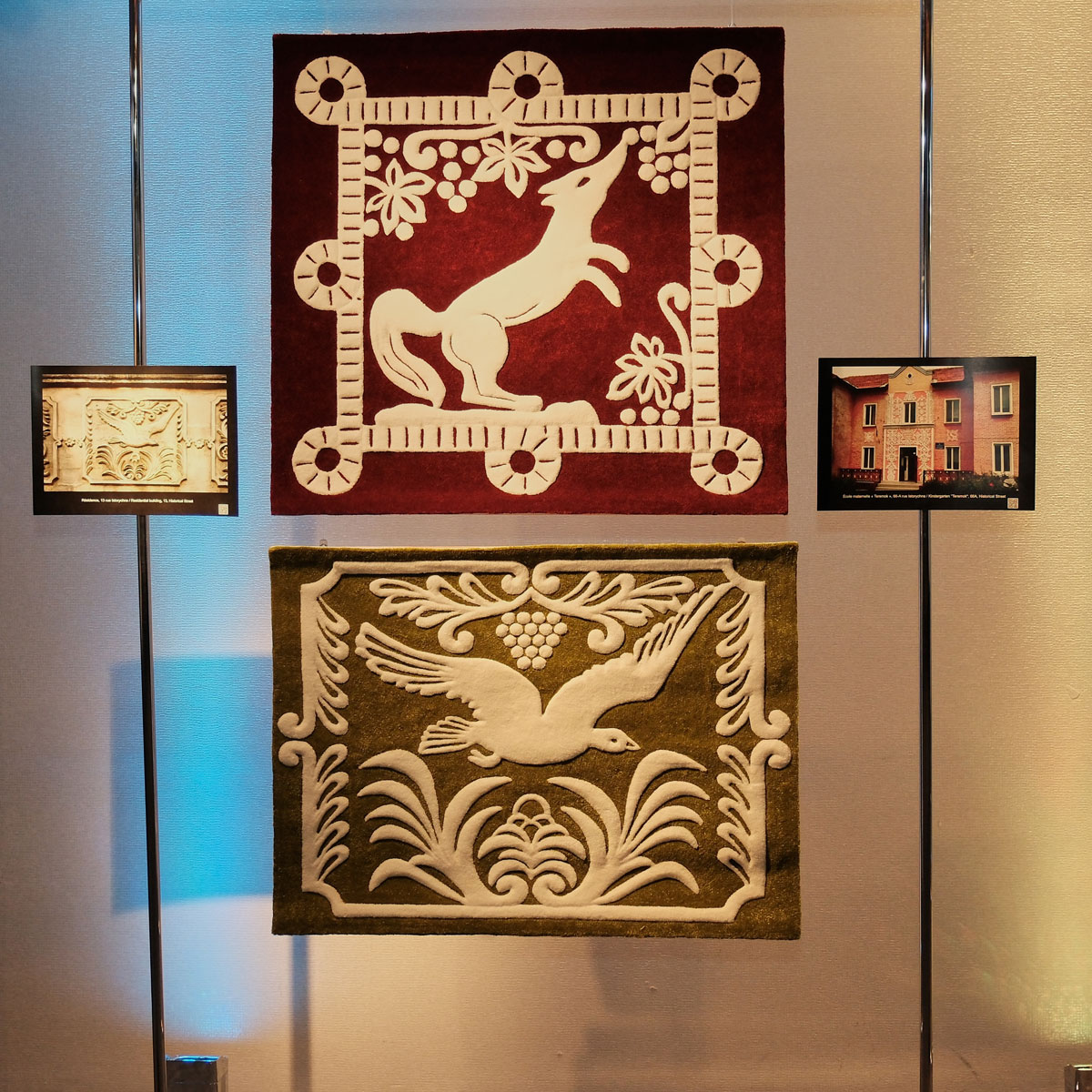
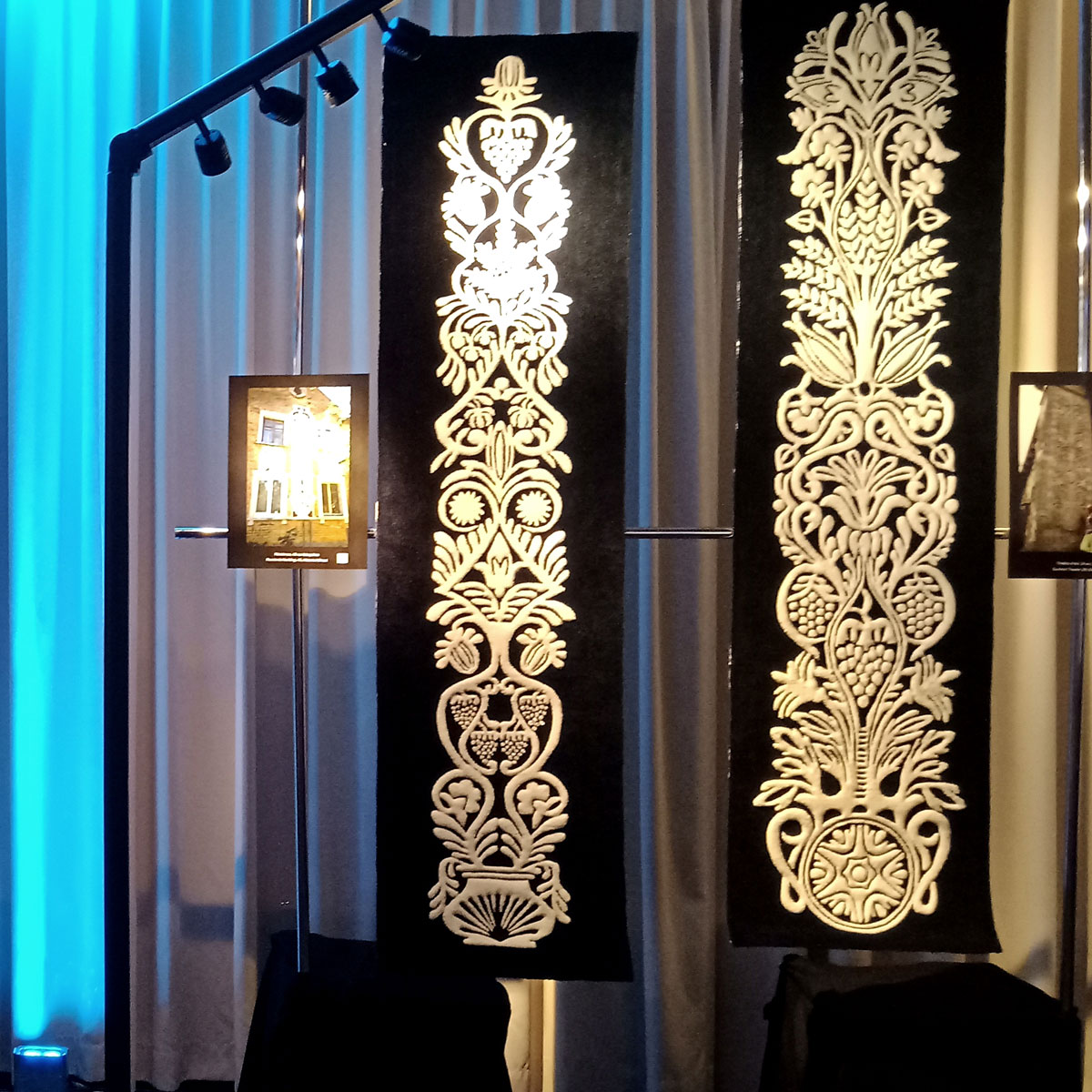
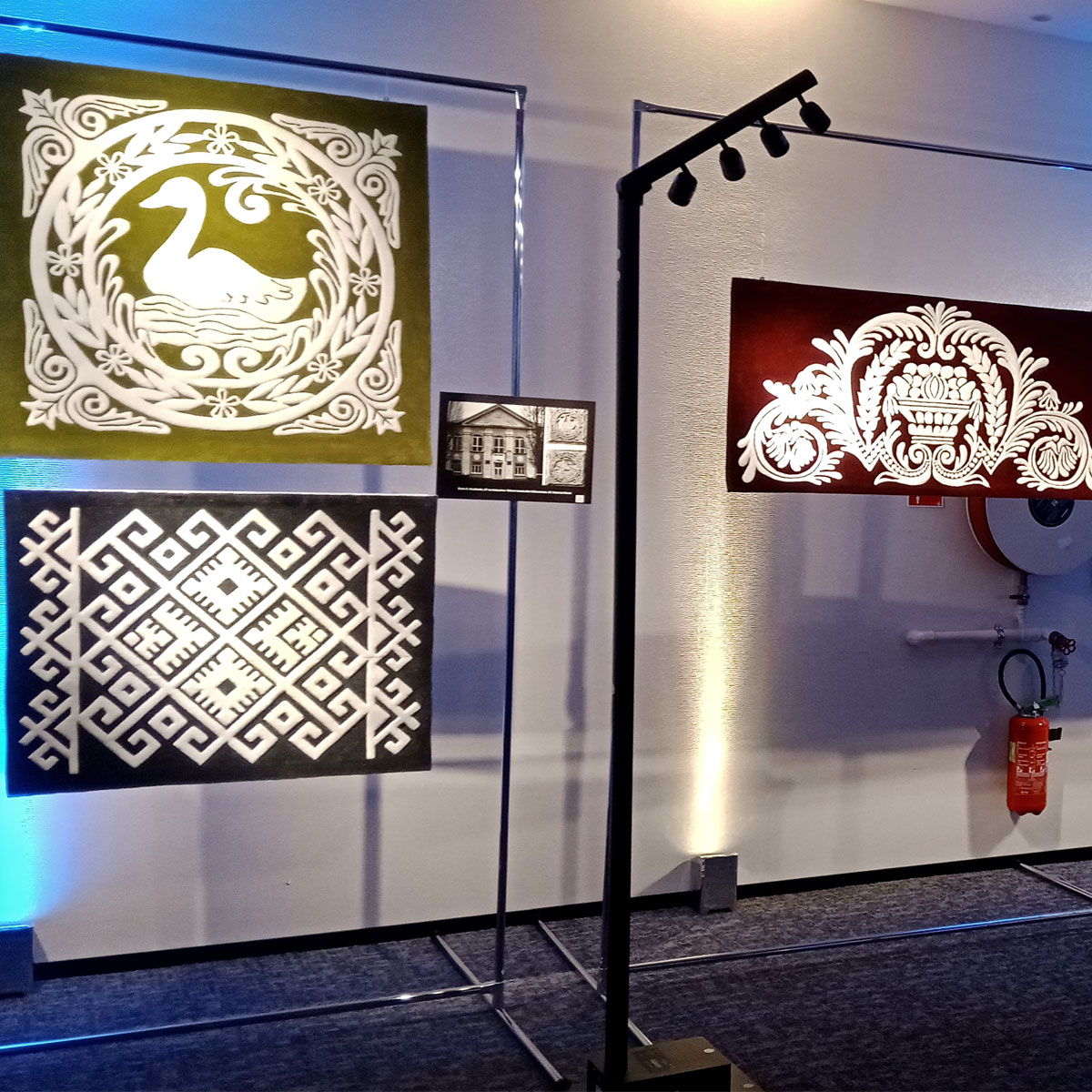
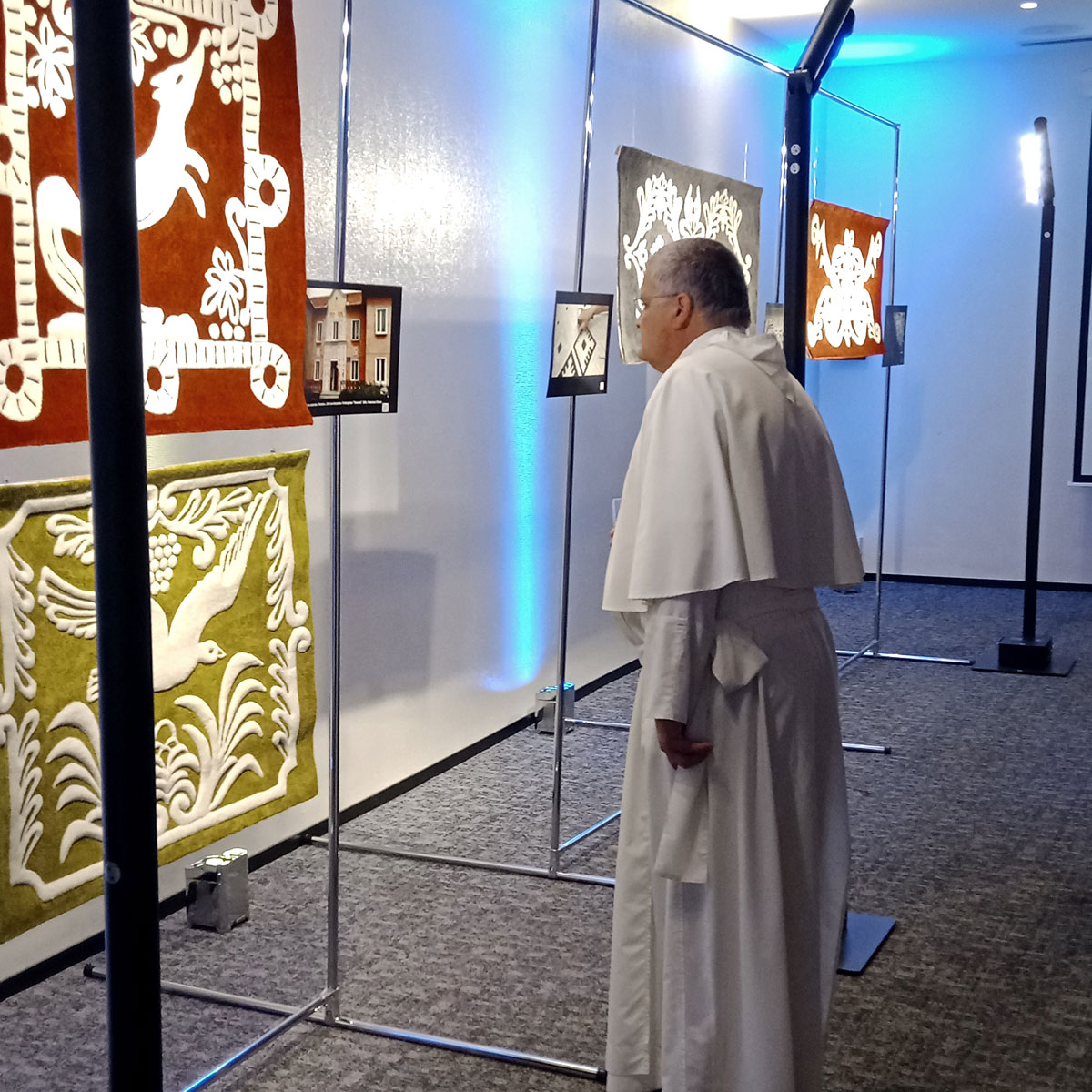
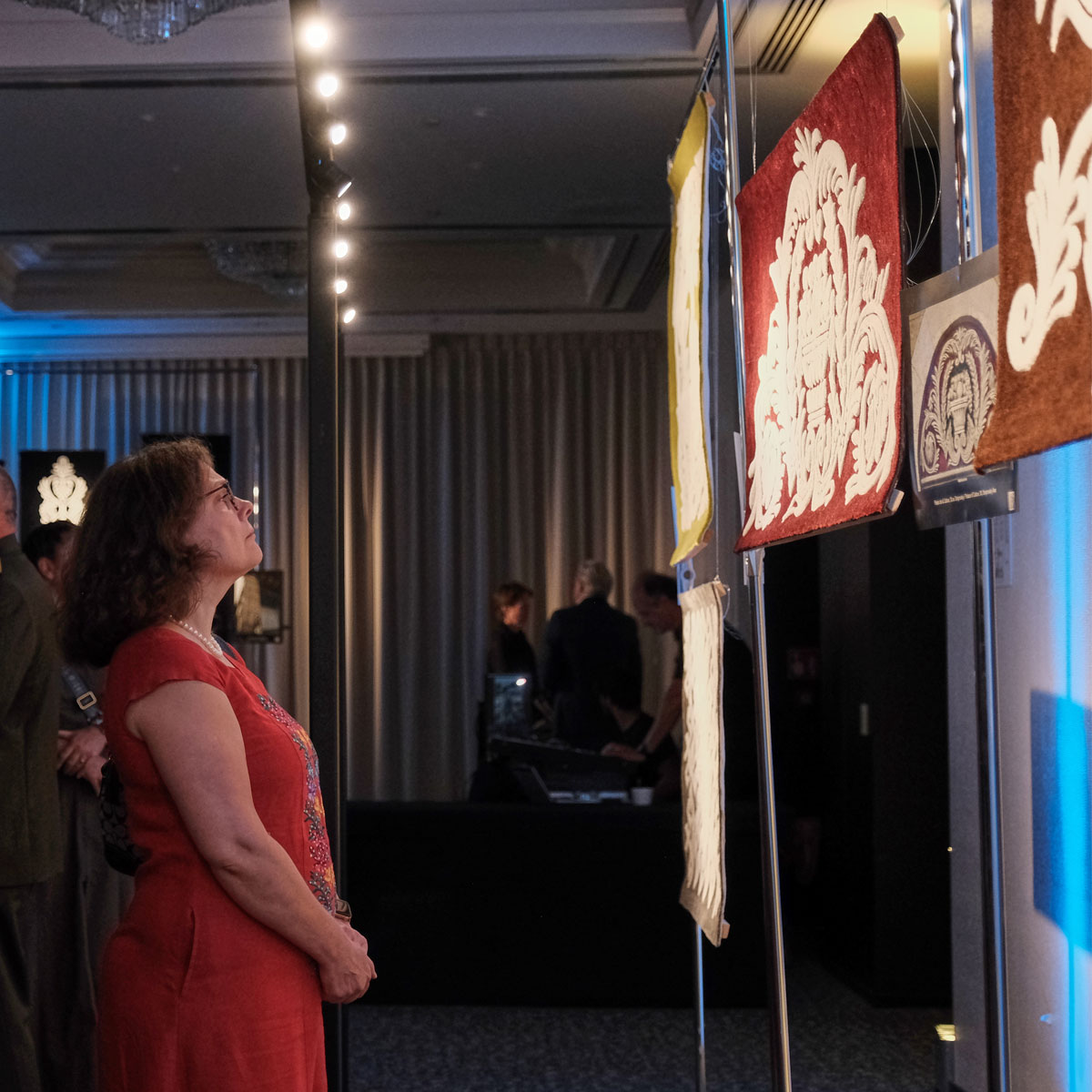
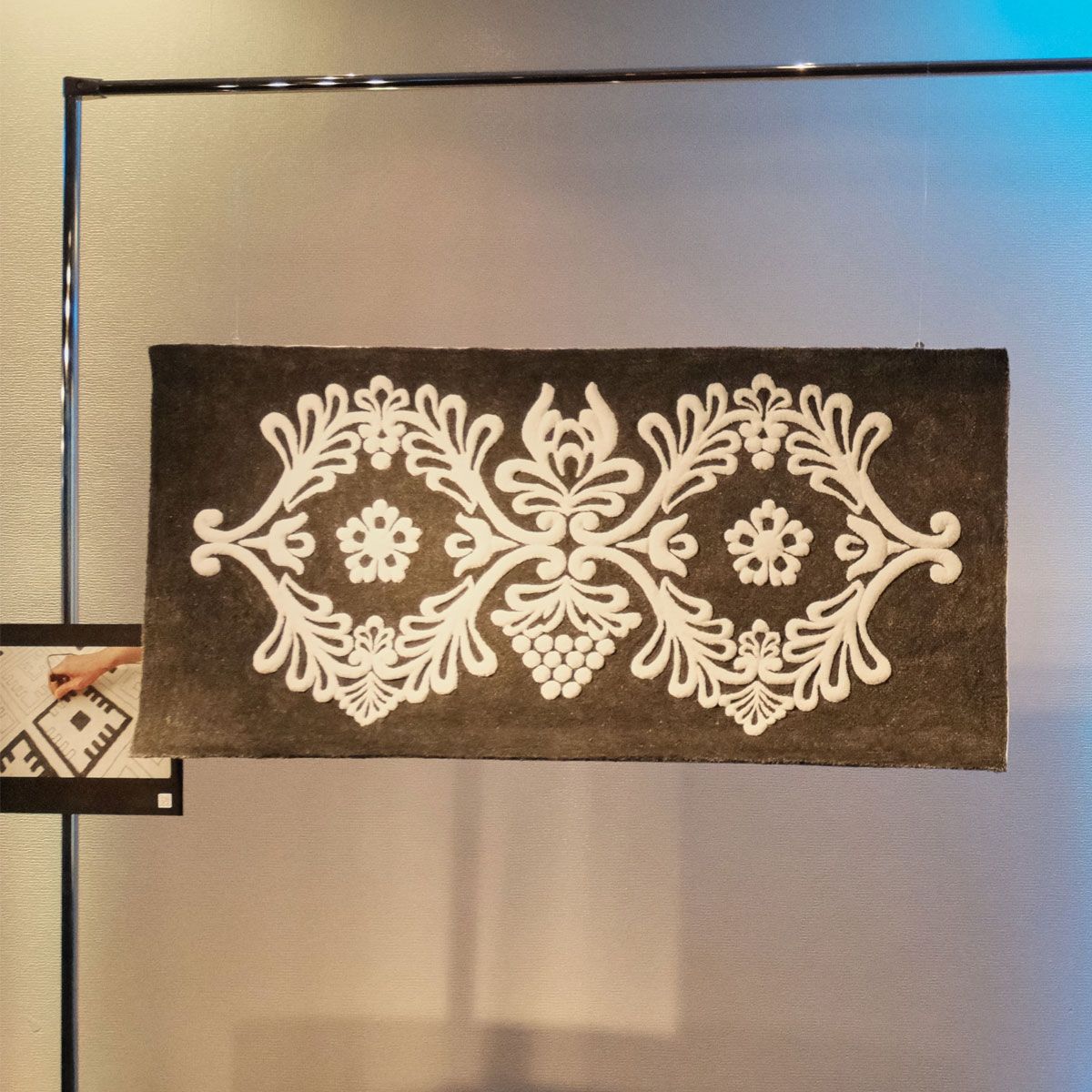
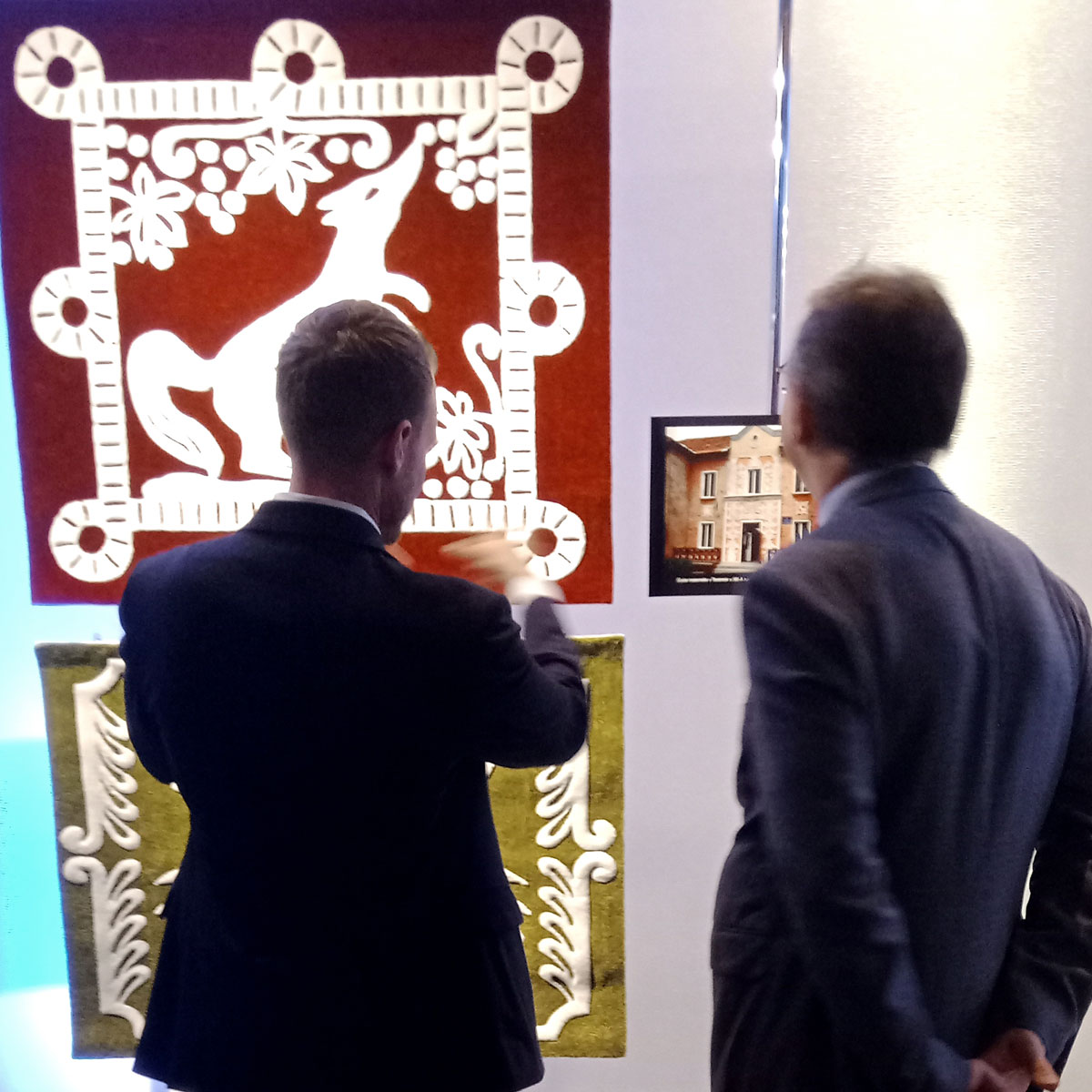
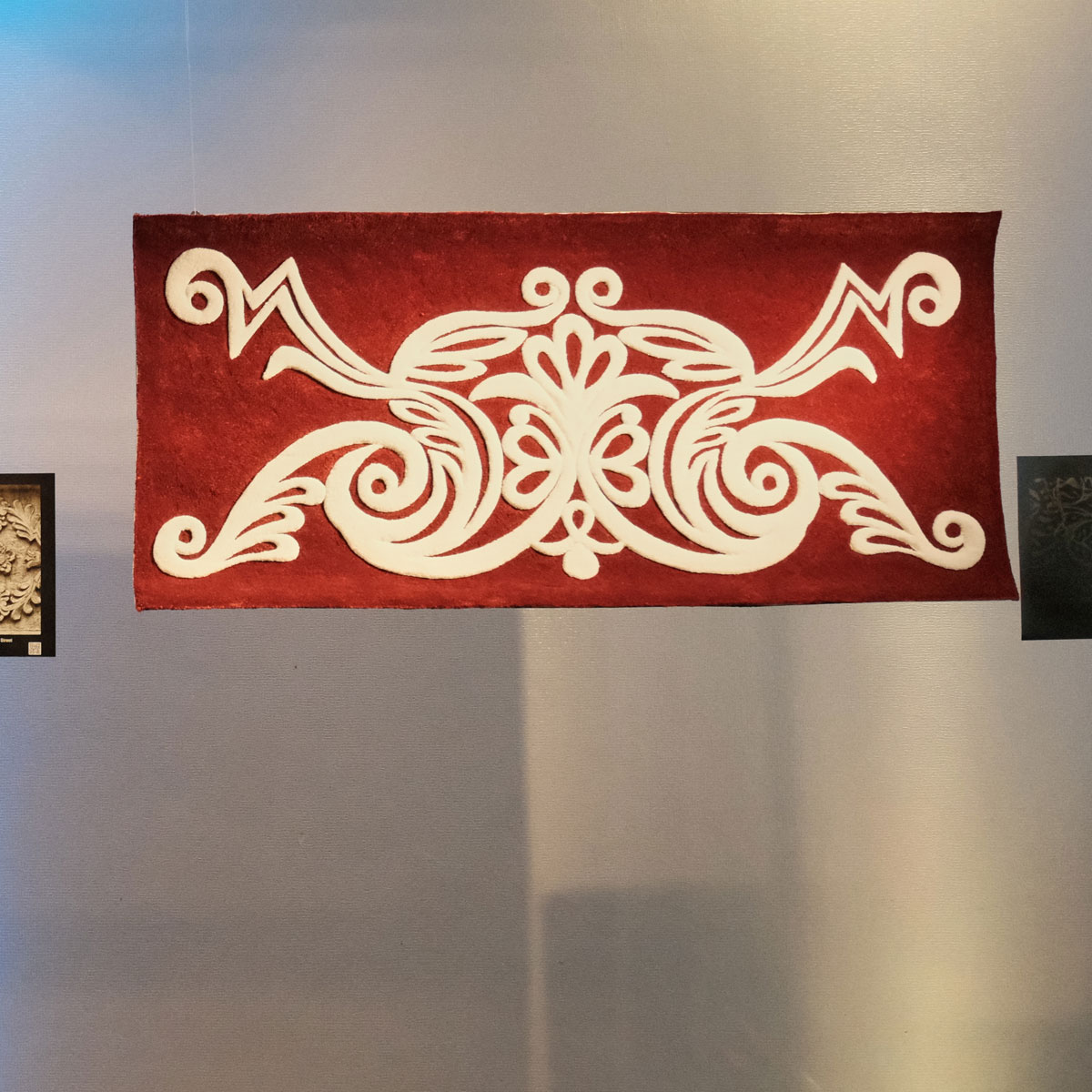
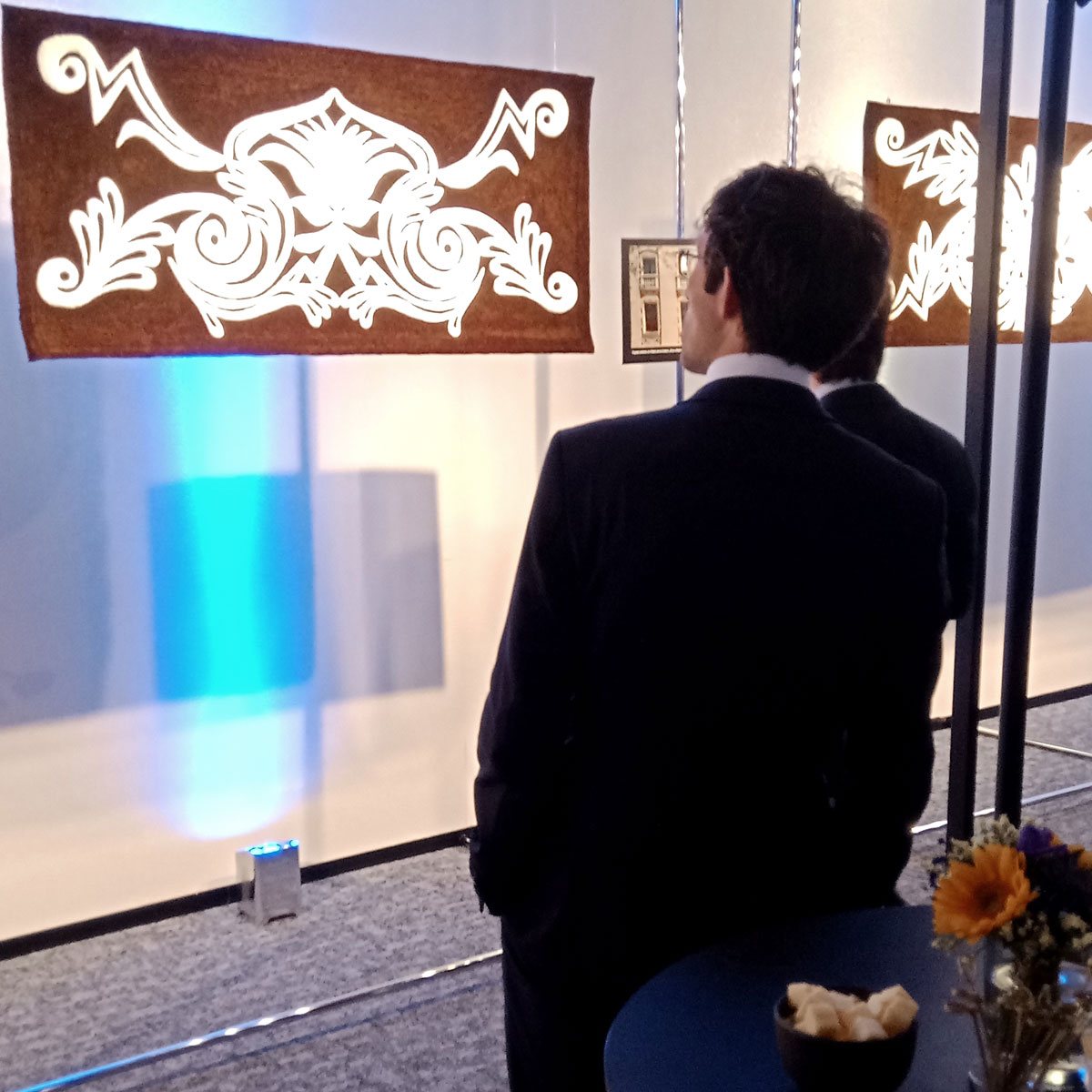
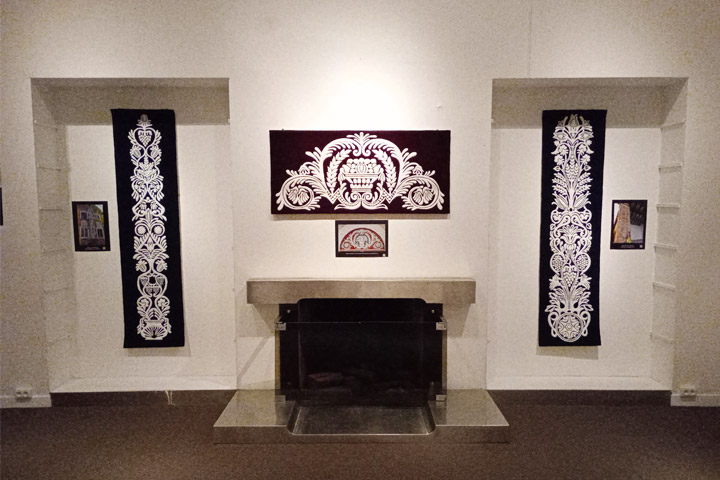
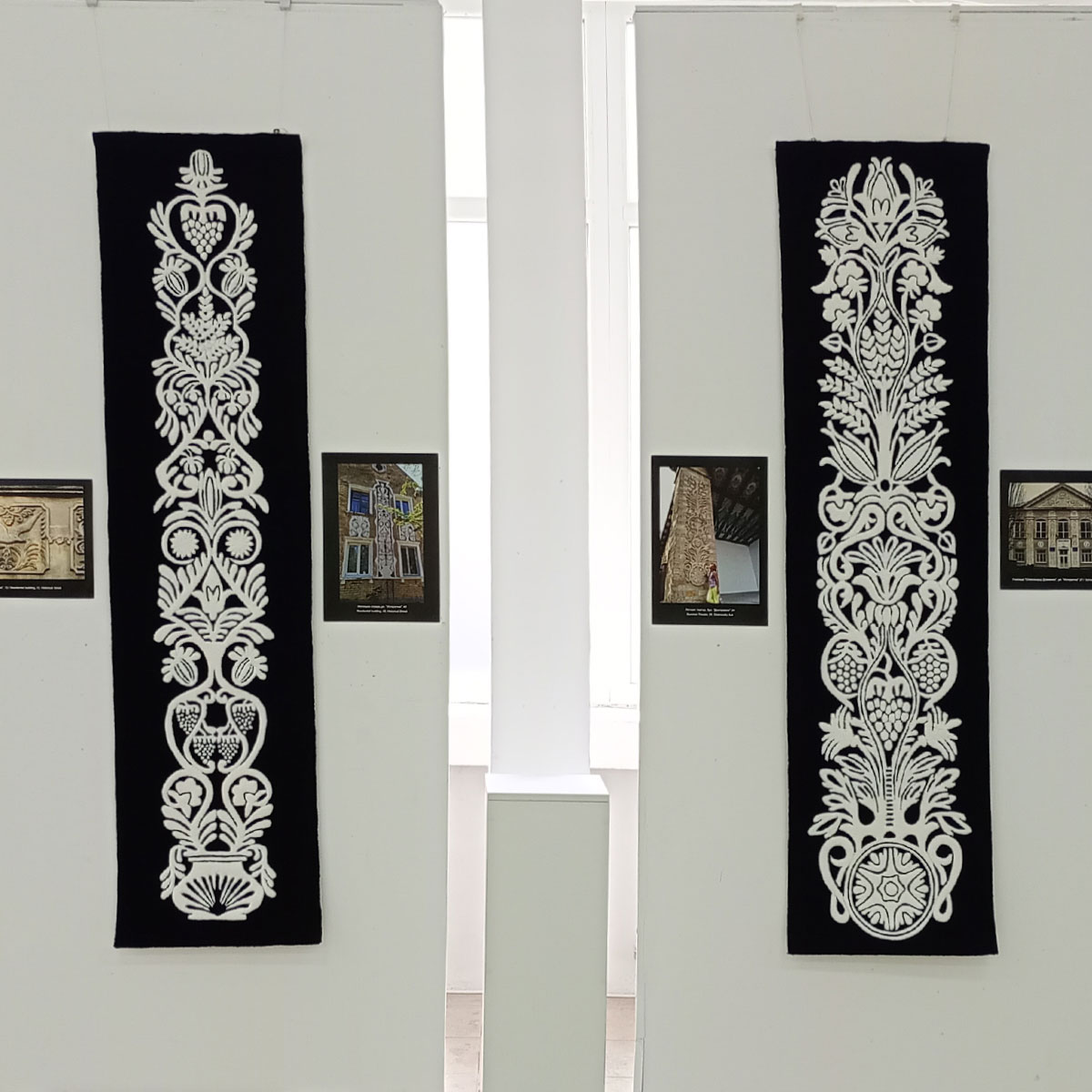
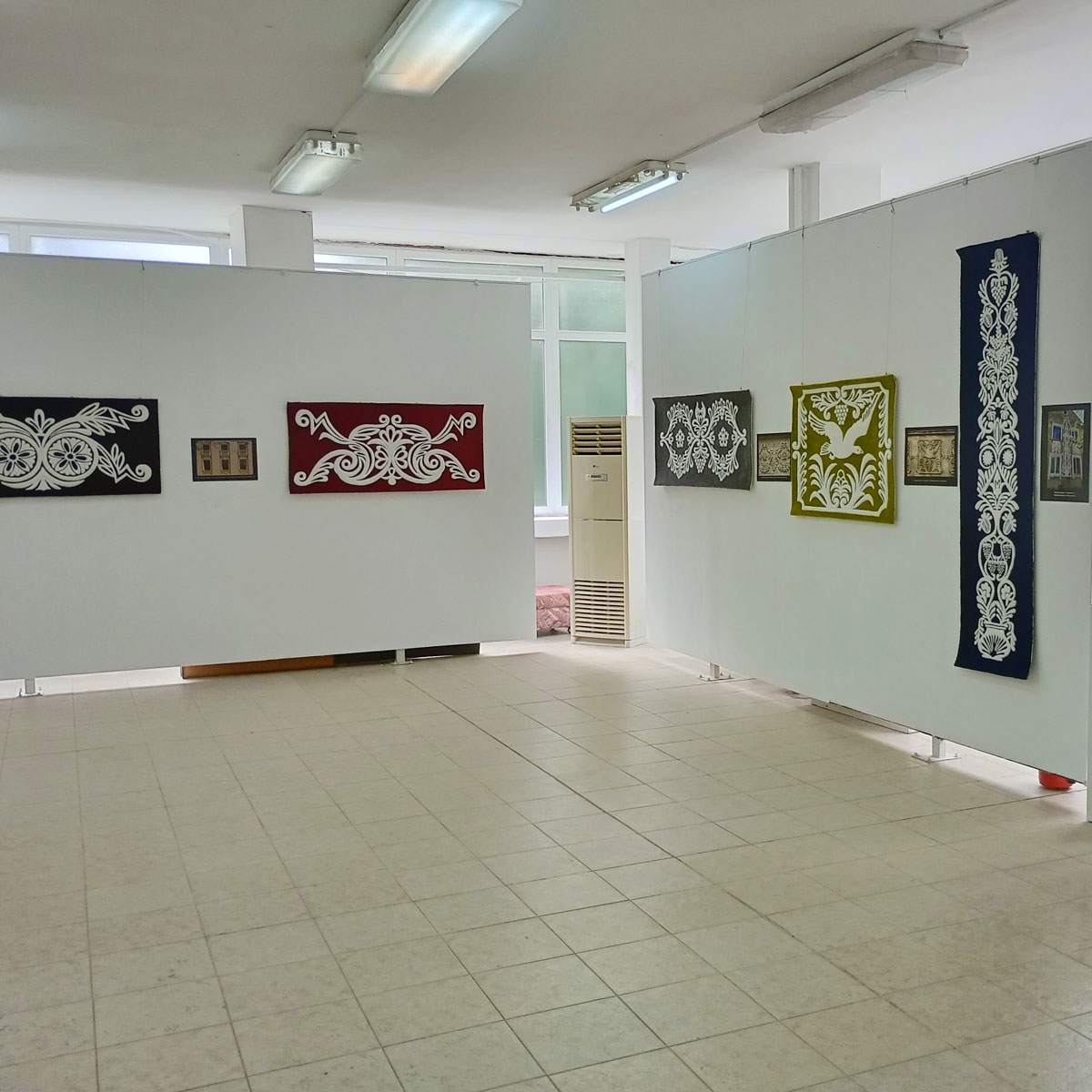
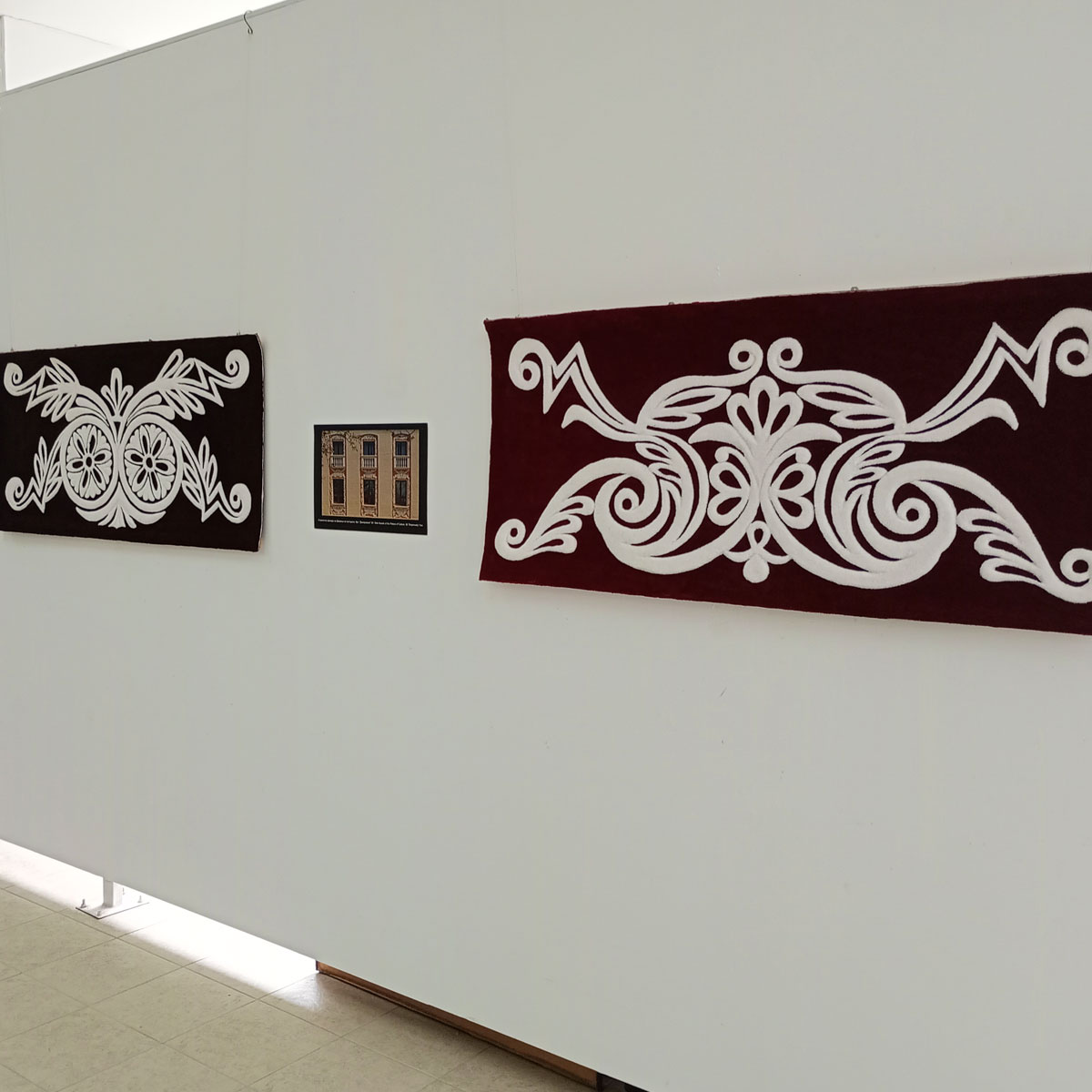
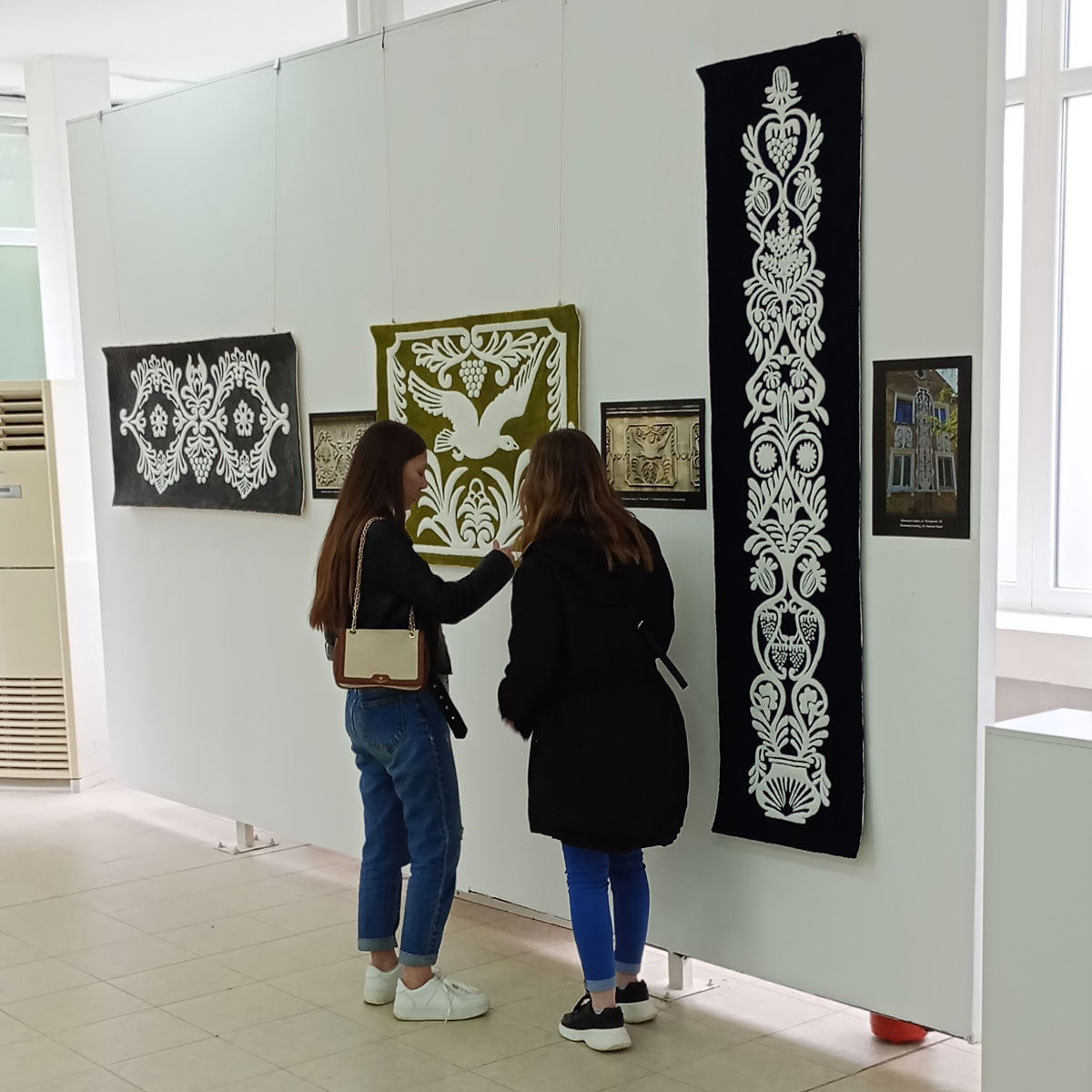
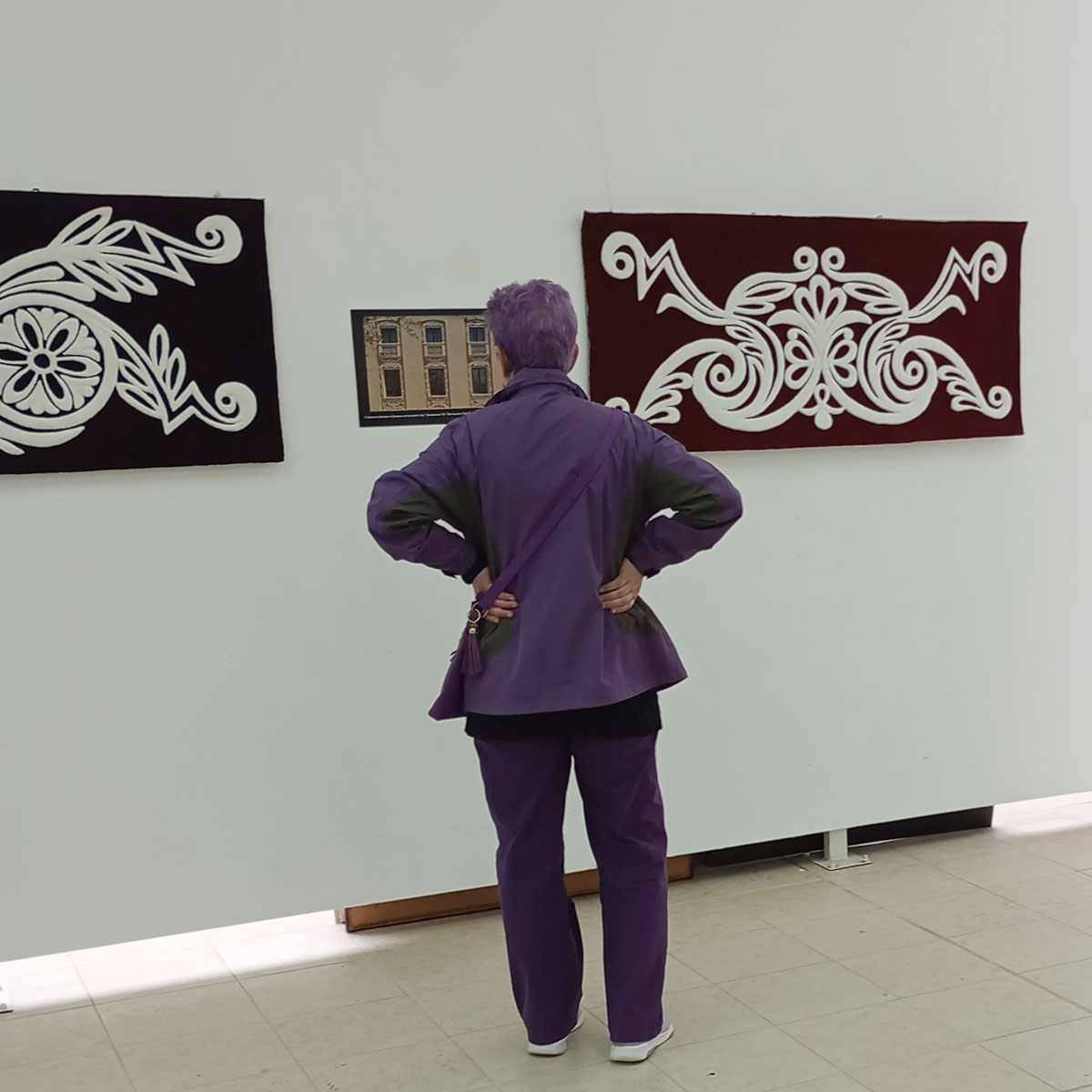
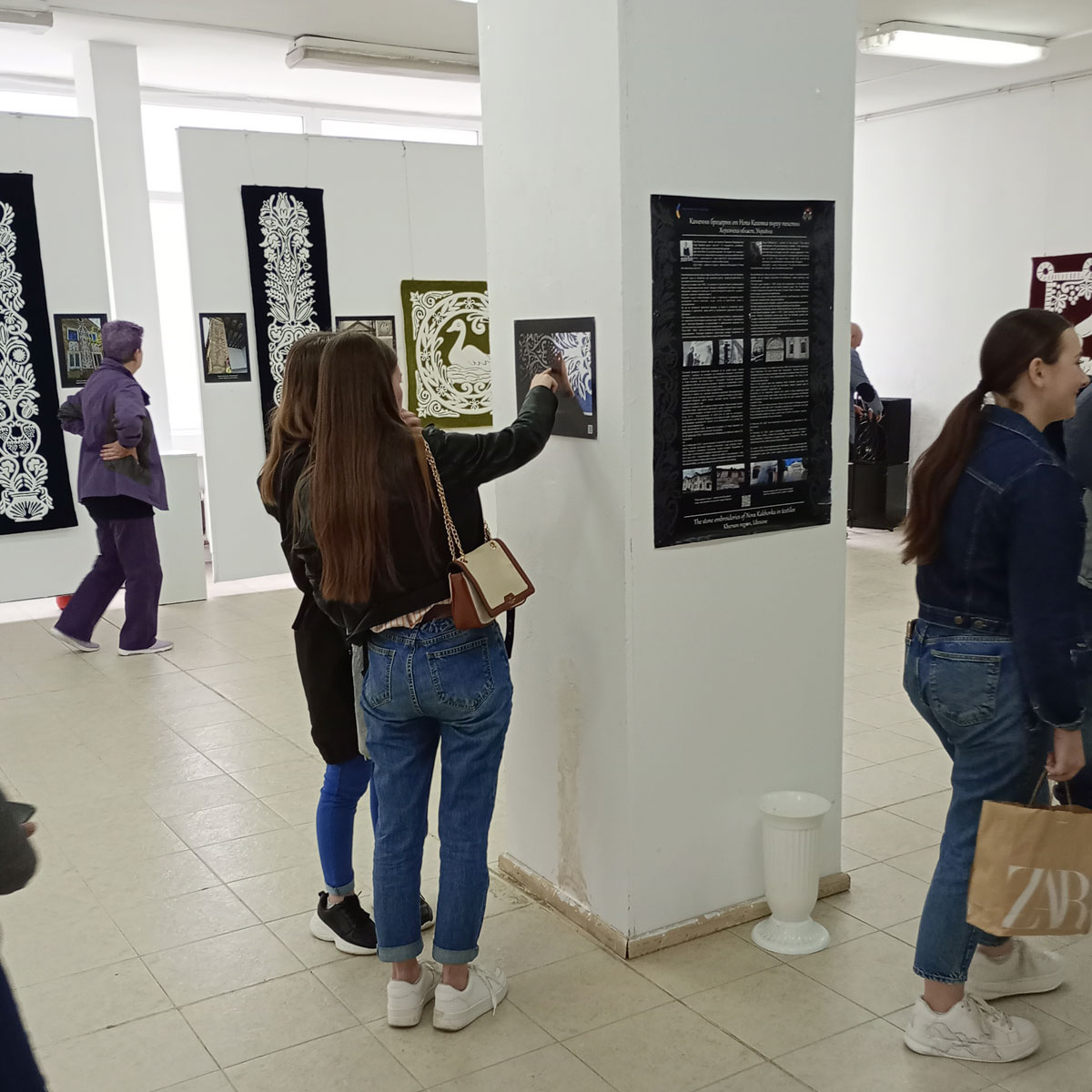
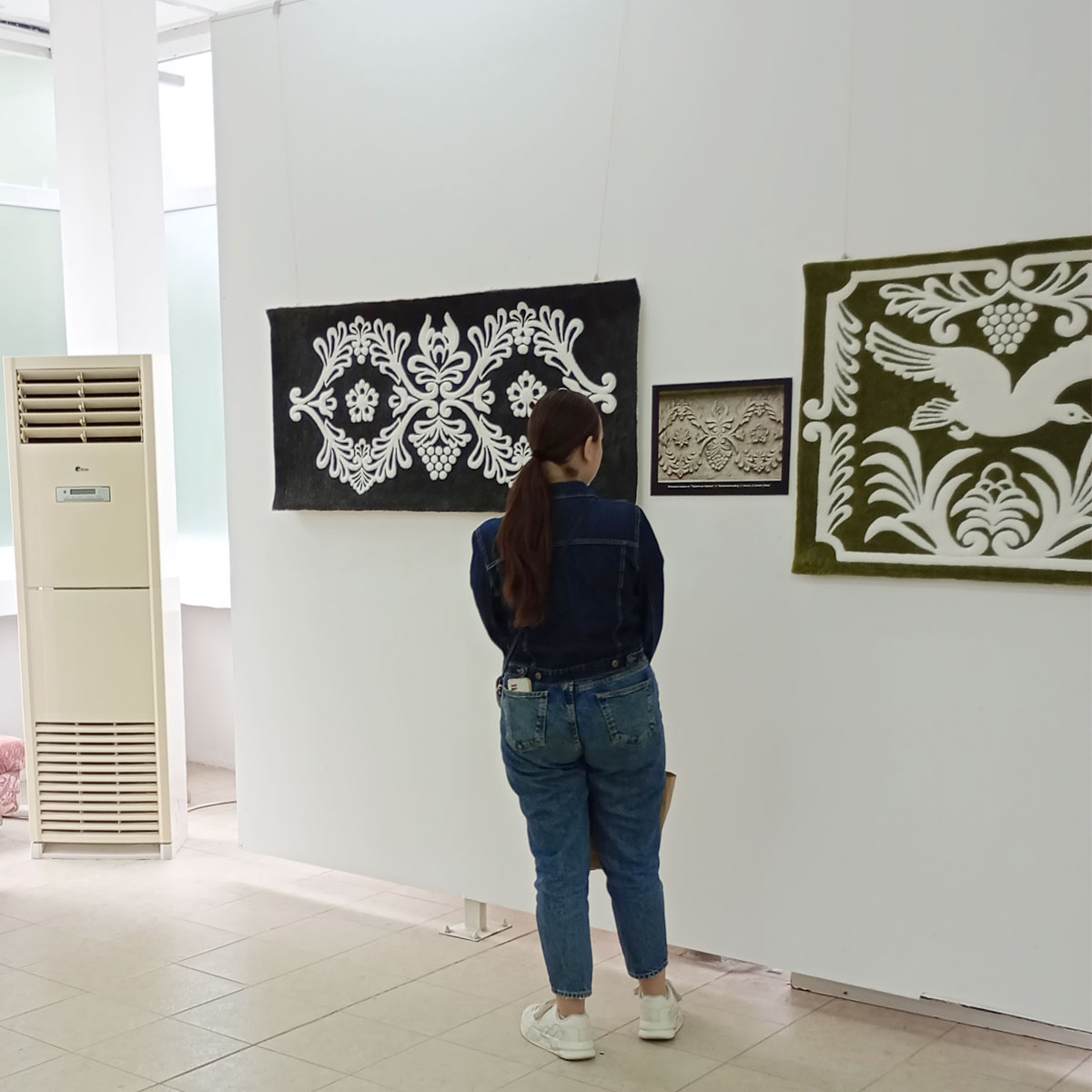
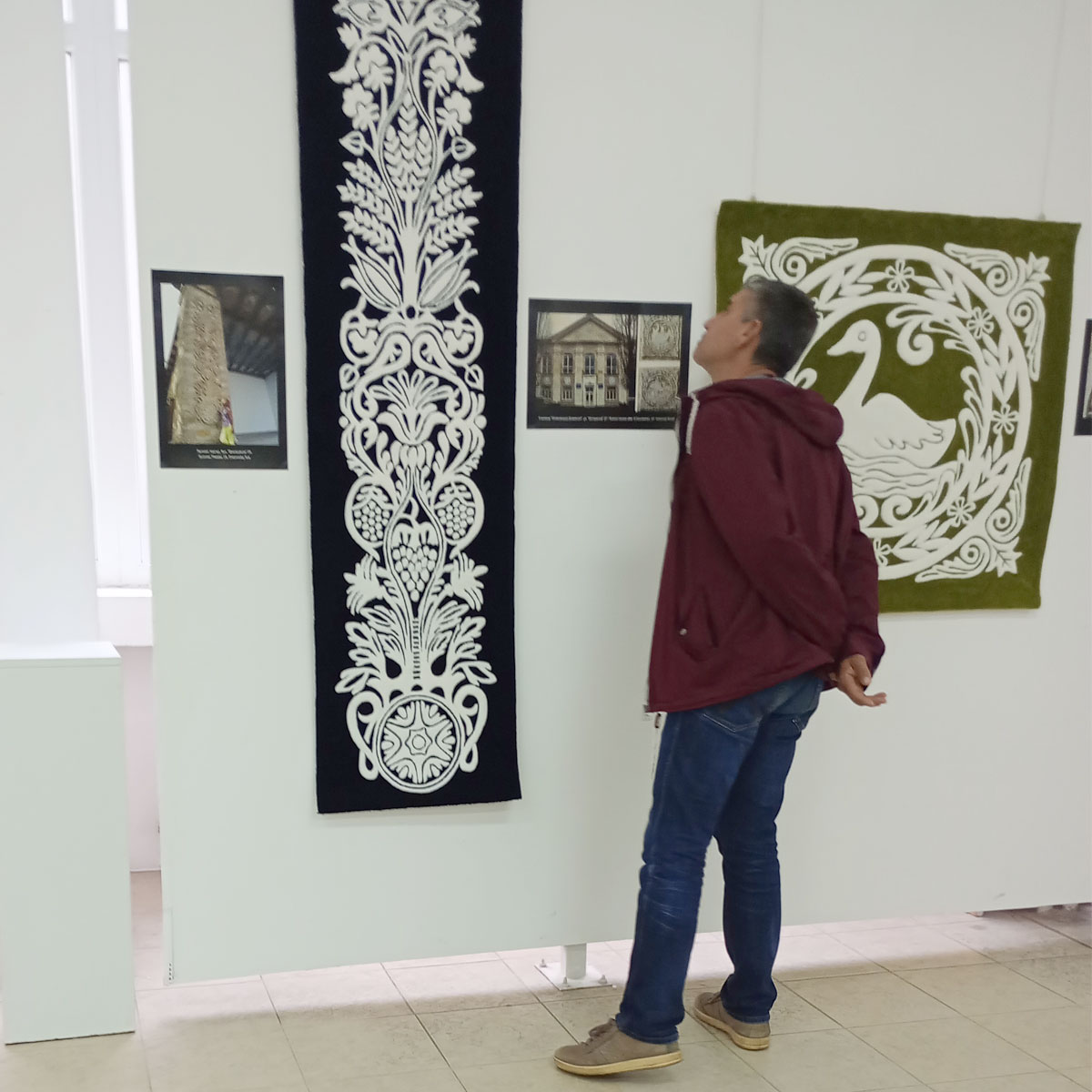
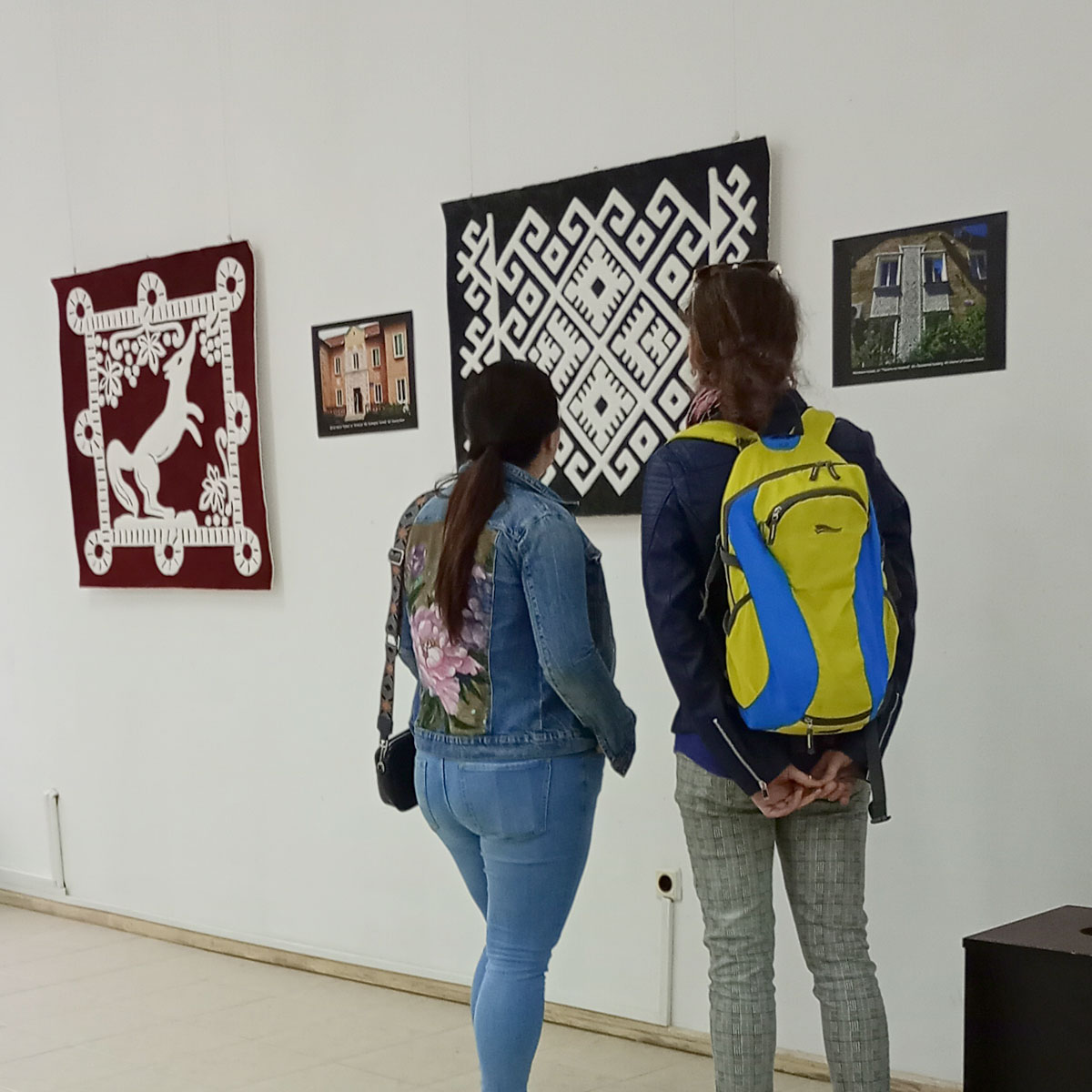
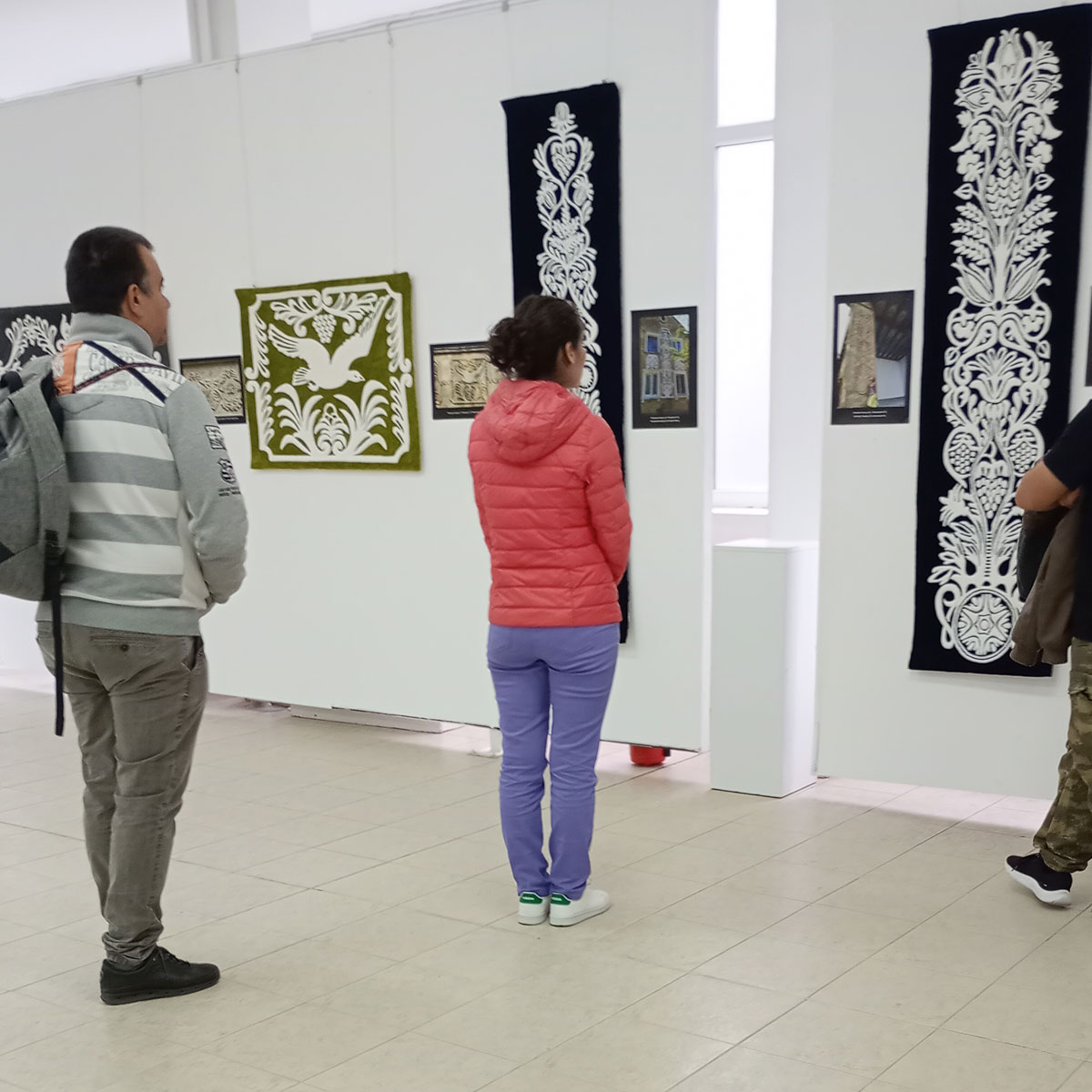
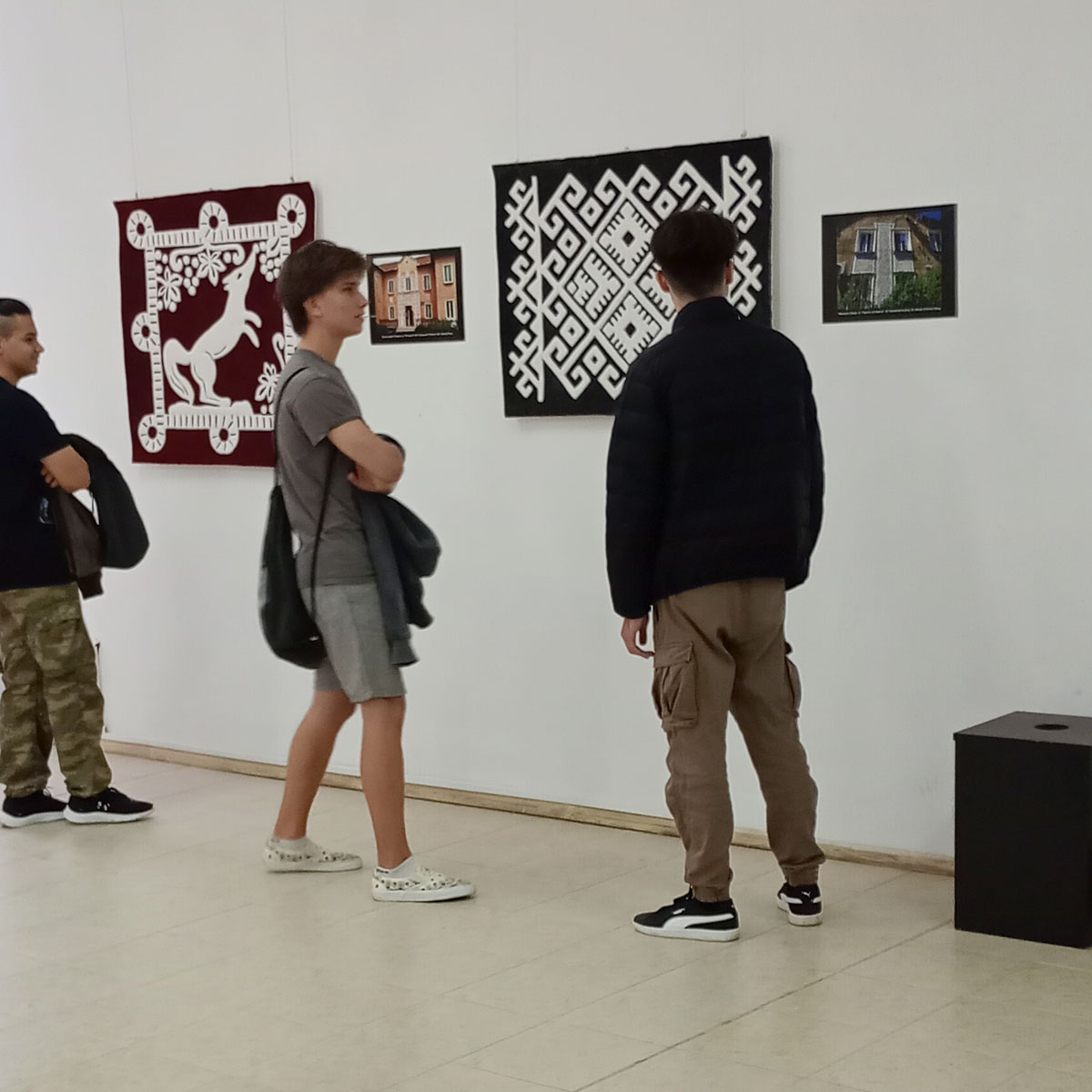
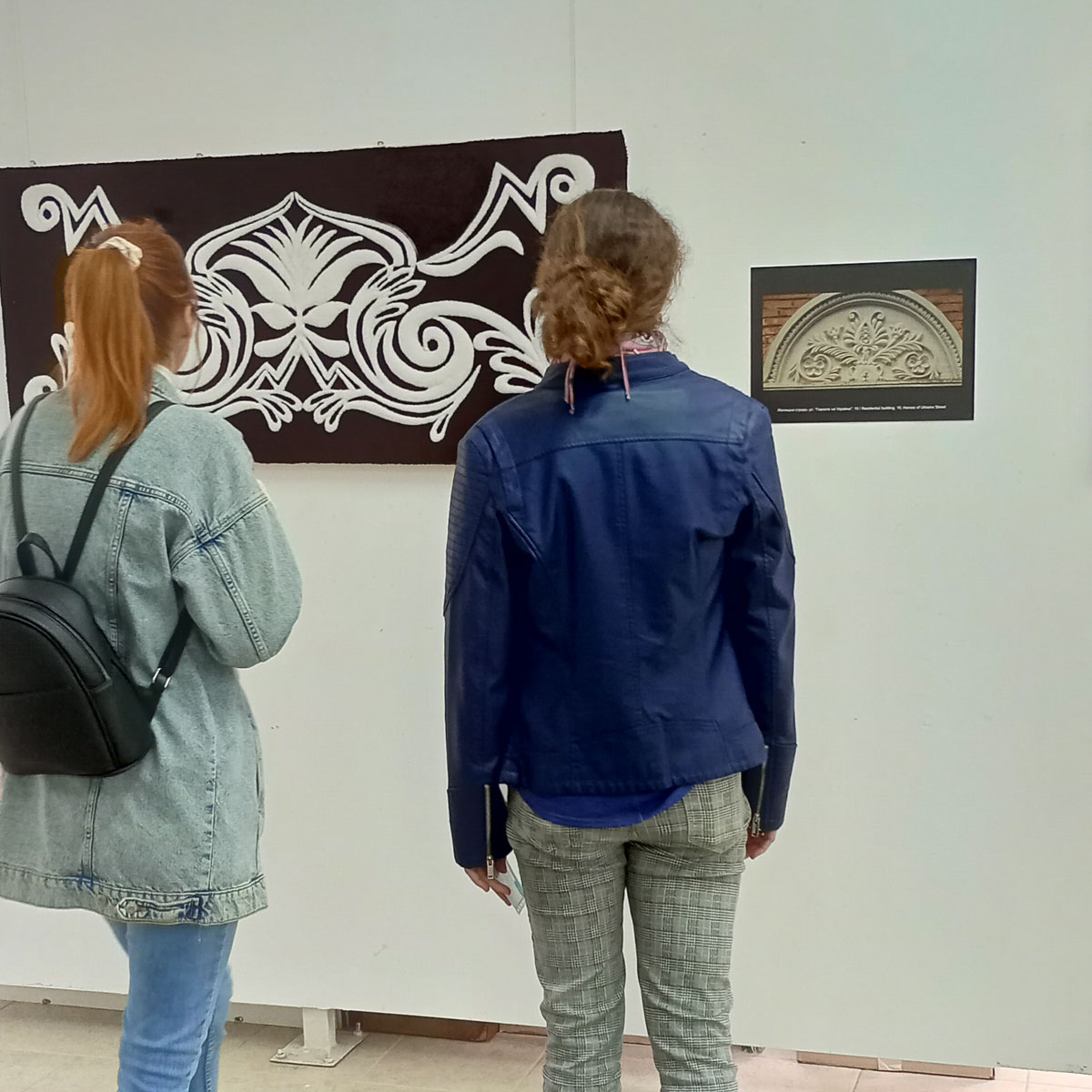
Twelve textile wall panels recreate the “stone embroideries” of Nova Kakhovka – intricate architectural ornaments created for the city’s buildings in the 1950s, based on designs by Ukrainian monumental artist Hryhoriy Dovzhenko. Their lace-like forms are translated from architectural reliefs into textile, preserving the distinctive artistic heritage of this Ukrainian city.
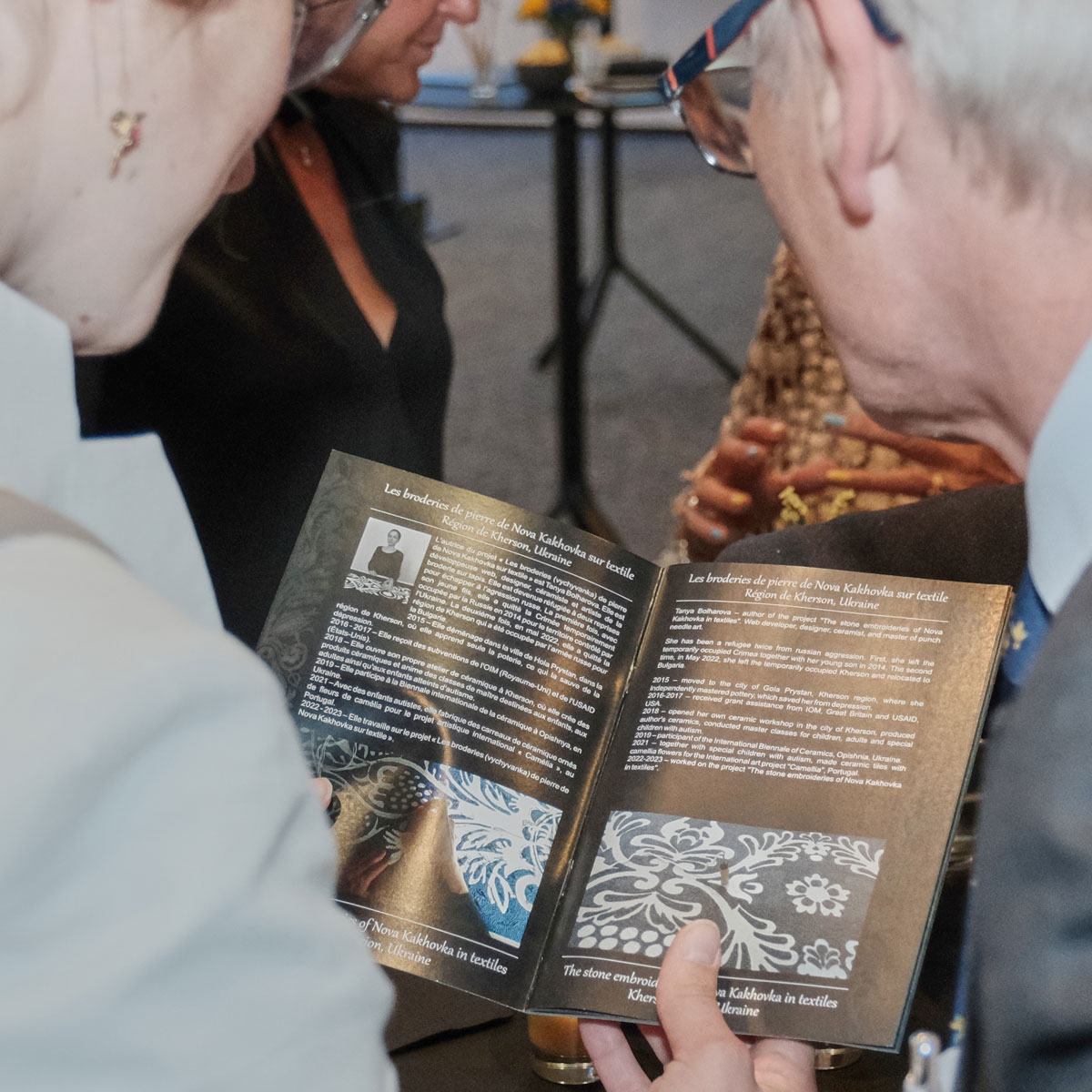
The twelve panels were embroidered entirely by hand by Ukrainian artist Tanya Bolharova between September 2022 and August 2023, using the punch-needle carpet embroidery technique. The collection includes two panels measuring 200 × 50 cm, six measuring 140 × 65 cm, two measuring 100 × 80 cm, and two measuring 100 × 100 cm. Each panel is accompanied by an A3 photograph of the original building.
Conceived after the artist’s forced departure from Kherson in 2022, the project is both a tribute to the region that had become a second home after her displacement from Crimea and an effort to preserve Ukrainian cultural heritage threatened by war and destruction. What once belonged to the walls of a single city can now travel and be seen beyond them.
Drag or use the left and right arrow keys to browse the gallery.
The City Behind the Embroideries
The Origins of Nova Kakhovka
Founded in 1952 in the Kherson region of southern Ukraine, Nova Kakhovka became a distinctive ensemble of architecture, urban planning and monumental art. The town was built during the construction of the Kakhovka Hydroelectric Power Plant and the North Crimean Canal.
The project to bring water to Crimea also brought irreversible losses. Cossack Sich sites, Crimean Tatar fortresses, churches, mosques, gardens and settlements were flooded, erasing traces of the region’s rich and complex history.
Most of the new town’s houses were two or three storeys high, with tiled or slate roofs. Their grey, uniform facades were largely indistinguishable from one another.
An Architectural Language of Ornament
To transform these monotonous facades, a group of artists and architects was invited to Nova Kakhovka. Among them was Ukrainian monumental artist Hryhorii Dovzhenko, associated with the school of Mykhailo Boichuk, whose artists faced severe Soviet repression in 1937. Under pressure and the threat of arrest, Dovzhenko had turned away from prohibited artistic genres towards monumental ornamentation.
In 1953–1954, seeking to compensate for the losses caused by the flooding, Dovzhenko developed thousands of ornamental designs for residential and public buildings. They drew on Ukrainian traditional art, the Baroque, Cossack and Eastern decorative traditions. His son Taras and other artists associated with the Boichuk school, including Oleksandr Myzin, also contributed to their creation.
Dovzhenko patented his own technique of carving into wet plaster and painting with synthetic PVC-based resins. Using this method, he created more than 2,000 m² of decorative panels in Nova Kakhovka.
Each building received a unique composition. Dovzhenko considered its location within the neighbourhood, its purpose, facade colour and natural light. Based on his sketches, sculpted and carved ornamental reliefs transformed the appearance of the city.
Many panels featured elaborate floral motifs inspired by Ukrainian art and folk embroidery: flowers, grapes, ears of wheat, vases, traditional kumantsi vessels and trees of life. Their pale, intricate patterns stood against multicoloured backgrounds, resembling white woven lace.
Visitors remembered Nova Kakhovka as a town of white buildings surrounded by greenery and flowers, with ornamental facades that seemed to glow. Some described it as a city covered in lace.
Forgotten and Rediscovered
Despite their artistic significance, Dovzhenko’s monumental works received no official recognition at the time. From the 1960s onwards, many ornamental reliefs were covered with monotonous layers of whitewash and gradually forgotten. Over the following decades, both the buildings and their decorations deteriorated.
After 2010, local activists and volunteers began restoring the ornaments, caring for their preservation and working to stop their destruction. These extraordinary architectural reliefs became a recognised symbol of southern Ukraine, known as the “stone embroideries of Nova Kakhovka”.
On 28 February 2022, Nova Kakhovka was supposed to celebrate its 70th anniversary.
War and Destruction
Four days before that anniversary, on 24 February 2022, russia launched its full-scale invasion of Ukraine. Nova Kakhovka came under russian occupation. Rockets, tanks, artillery and aerial bombs brought destruction and death. Residents disappeared, people were killed or injured by mines, and shelling damaged and destroyed homes.
On 6 June 2023, russian forces destroyed the dam of the Kakhovka Hydroelectric Power Plant, which had supplied water to southern Ukraine. The resulting catastrophe flooded Nova Kakhovka and large areas of the Kherson region, causing devastating environmental damage – destruction described as ecocide.
Acknowledgements
This project was made possible through the generosity, expertise and commitment of people and organisations who offered their support in very different ways.
Rada and Plamen Ivanov – for welcoming the artist and her son into their home, supporting her embroidery work, and offering exceptional kindness and understanding.
Erre Gandarela – Portuguese ceramic artist, for his encouragement, practical help and support with the high-quality Portuguese embroidery needles essential to creating the panels.
Kate Malone, MBE – British ceramic artist, for her moral and financial support, generosity and genuine interest in the project.
Krastyu Krastev and the Bulgarian Ministry of Culture – for supporting and organising the project’s first exhibition in Sofia.
Embassy of Ukraine in Bulgaria – for its trust, support and assistance in organising the project’s first exhibition events.
Olena Koceva — SUOB “Mother Ukraine” – for her commitment, confidence in the project, practical assistance and remarkable energy throughout its development.
Nova Kakhovka Society of Cultural Heritage Protection – for providing photographs and reference materials documenting Nova Kakhovka’s unique architectural heritage.
Exhibitions & Presentations
Brussels, Belgium
10 September 2024
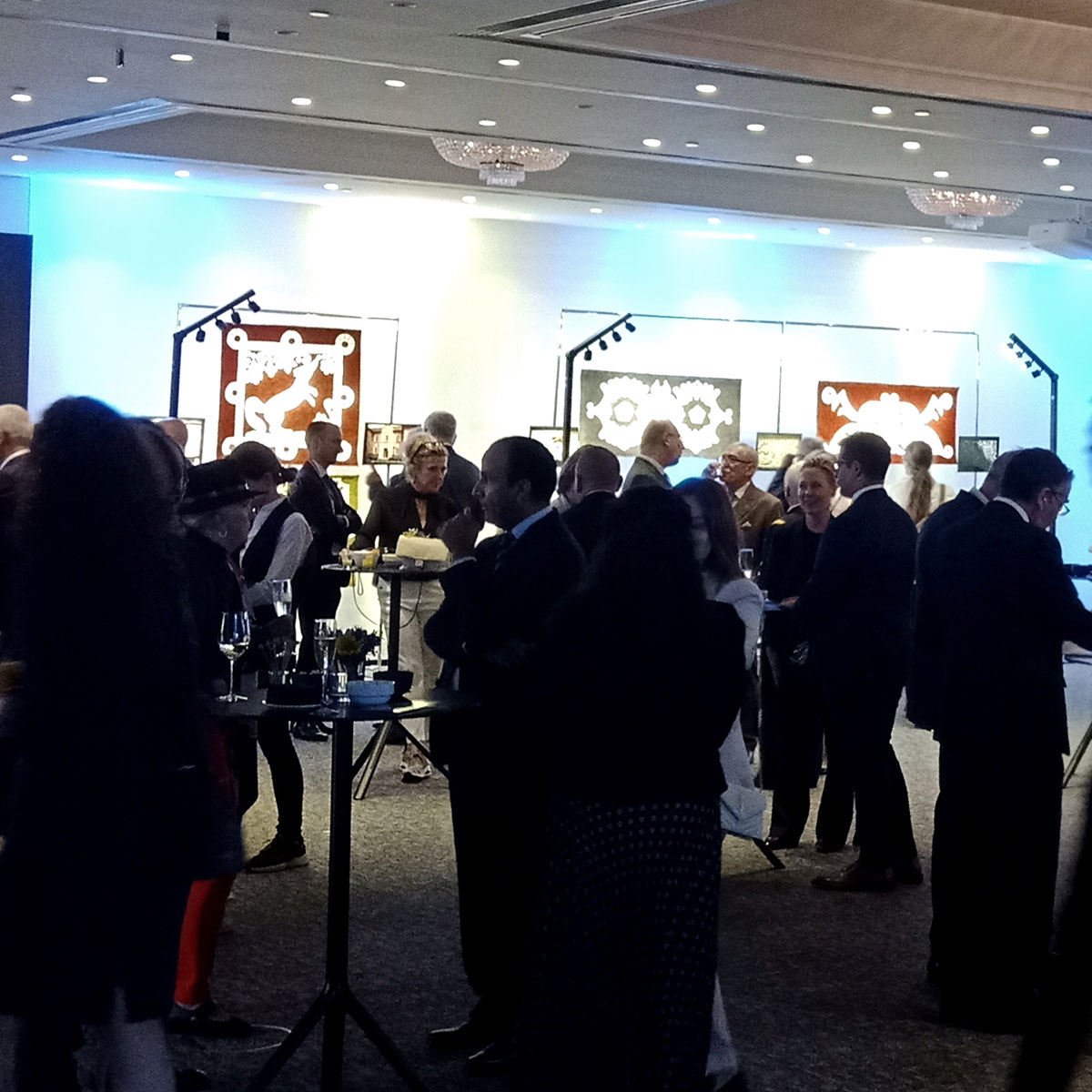
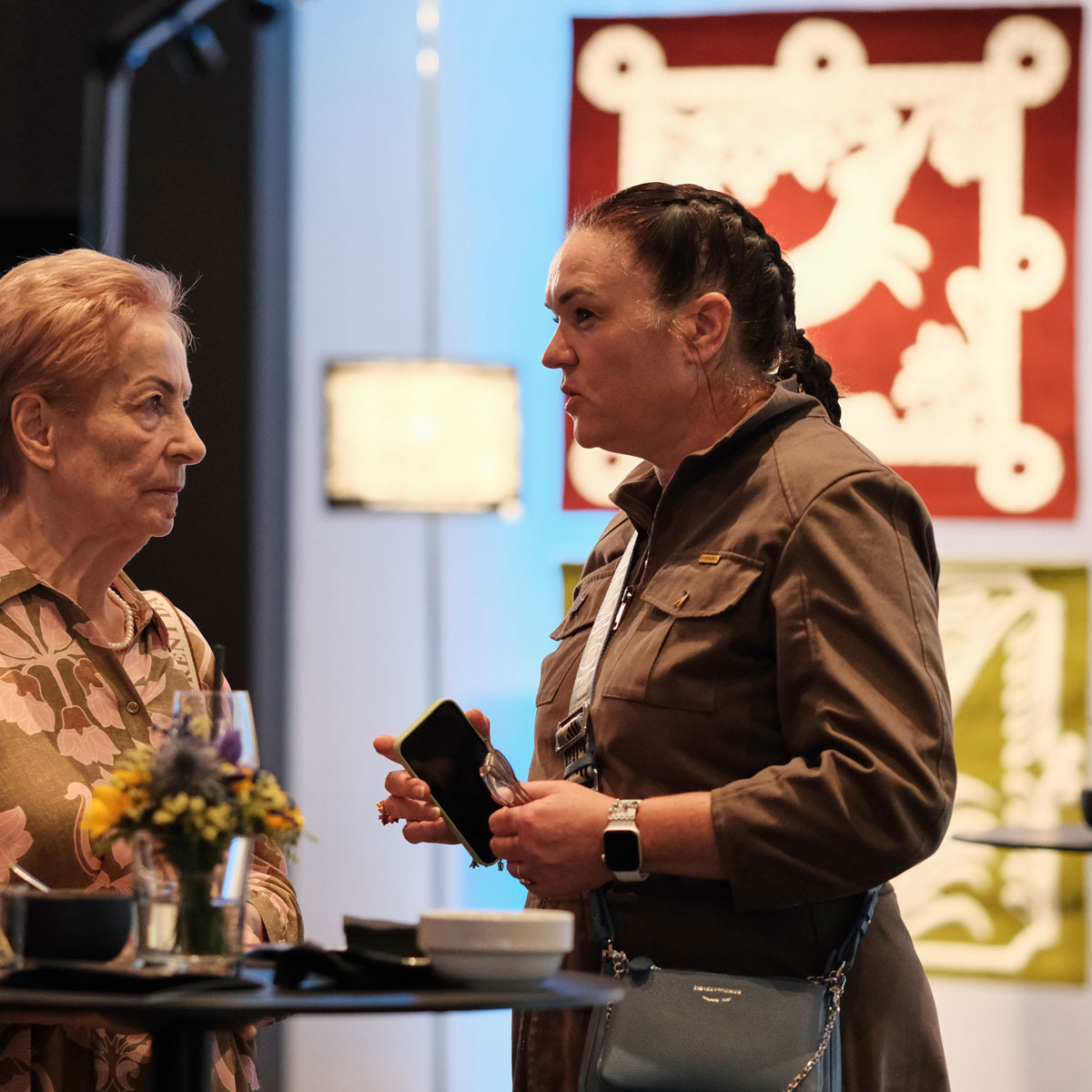
On 10 September 2024, “The Stone Embroideries of Nova Kakhovka in Textiles” was presented in Brussels during a charity evening organised by the Embassy of Ukraine in Belgium to mark Ukraine’s Independence Day.
Held in cooperation with UNITED24, the event raised more than UAH 750,000 to support the reconstruction of Ukrainian schools and the creation of protective shelters. The textile panels were presented alongside the immersive VR project “Living The War”, bringing the endangered cultural heritage of Nova Kakhovka to the attention of an international audience.
Drag the photos or use the arrow keys to browse.
Paris, France
30 May 2024 – 28 June 2024
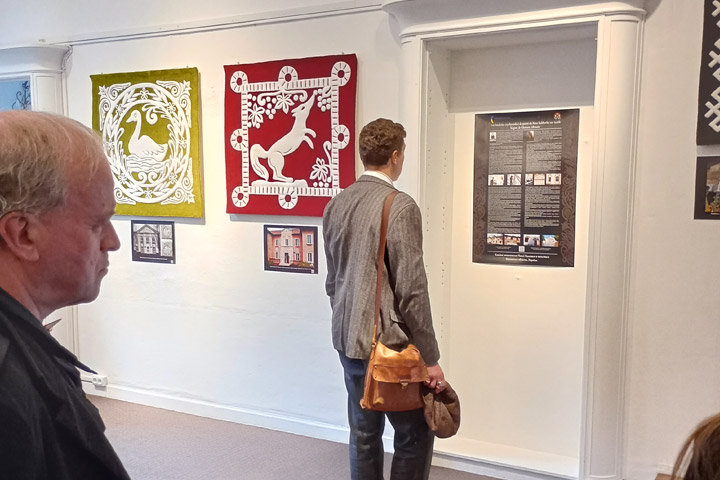
From 30 May to 28 June 2024, “The Stone Embroideries of Nova Kakhovka in Textiles” was exhibited at the Ukrainian Cultural Centre in Paris, in the former home of Alain Delon. The exhibition was held with the support of the Centre Culturel d’Ukraine en France, the Embassy of Ukraine in France and SUOB “Mother Ukraine”.
The Paris exhibition introduced an international audience to Nova Kakhovka’s architectural heritage through twelve hand-embroidered textile panels. Presented far from the city whose buildings inspired them, the works drew attention to a unique artistic legacy threatened by war and destruction.
Drag the photos or use the arrow keys to browse.
Shumen, Bulgaria
10 May 2024 – 18 May 2024
The exhibition “The Stone Embroideries of Nova Kakhovka in Textiles” was presented at the Elena Karamihaylova Art Gallery in Shumen, Bulgaria. Through hand-embroidered textile panels, the project introduced visitors to the architectural ornaments of Nova Kakhovka and the Ukrainian cultural heritage threatened by russia’s war.
Shumen has been a sister city of Kherson since 1962. This longstanding connection gave the exhibition particular significance: a project born after the artist’s forced departure from Kherson was presented in a city with historic ties to the region whose cultural heritage it seeks to preserve.
Drag the photos or use the arrow keys to browse.
Kutna Hora, Czech Republic
22 February 2024 – 30 March 2024
The project’s third exhibition opened on 22 February 2024 at Spolkový dům in Kutná Hora, Czech Republic. The opening brought together Mayor Lukáš Seifert; Vitaliy Usatii, Chargé d’Affaires at the Ukrainian Embassy; Dagmar Ostranska, head of the city’s Department of Tourism, Education and Culture; and artist Tanya Bolharova.
The exhibition was supported and organised by Czech Centre Sofia, the Embassy of Ukraine in Prague, CPIC Středočeský kraj – Kutná Hora, Křesťanské společenství Kutná Hora, the ambUAlance project and SUOB “Mother Ukraine”.
Drag the photos or use the arrow keys to browse.
Varna, Bulgaria
5 October 2023 – 7 November 2023
The second exhibition of “The Stone Embroideries of Nova Kakhovka in Textiles” opened on 5 October 2023 at the Pencho Slaveykov Regional Library in Varna, Bulgaria.
The official opening was attended by Ukrainian Ambassador to Bulgaria Olesia Ilashchuk, Varna Mayor Ivan Portnik, Deputy Mayor Ralitza Gerasimova, library director Radka Kalcheva and artist Tanya Bolharova. The exhibition was supported by the Embassy of Ukraine in Bulgaria and SUOB “Mother Ukraine”.
Exhibition photography: Natalia Bozhidarova.
Drag the photos or use the arrow keys to browse.
Sofia, Bulgaria
24 August 2023 – 30 September 2023
The first exhibition of “The Stone Embroideries of Nova Kakhovka in Textiles” opened in Sofia on 24 August 2023. The official opening was attended by Bulgarian Minister of Culture Krastyu Krastev, Ukrainian Ambassador to Bulgaria Olesia Ilashchuk and artist Tanya Bolharova.
“Since this barbaric attack by the russian side on Ukraine began, the occupiers are destroying the historical and cultural heritage of Ukraine every day. And I, as the Minister of Culture of the Republic of Bulgaria and as a person who has a direct relationship with culture throughout my life, strongly condemn these barbaric and inhuman actions on the part of the russian side,” said the Minister of Culture of Bulgaria at the opening of the exhibition.
The exhibition welcomed representatives of Bulgaria’s government and parliament, Sofia’s municipal authorities, the diplomatic corps, cultural and civic organisations, business and artistic communities, the clergy and the Ukrainian community in Sofia.
The exhibition was supported and organised by the Bulgarian Ministry of Culture, the Embassy of Ukraine in Bulgaria and SUOB “Mother Ukraine”.